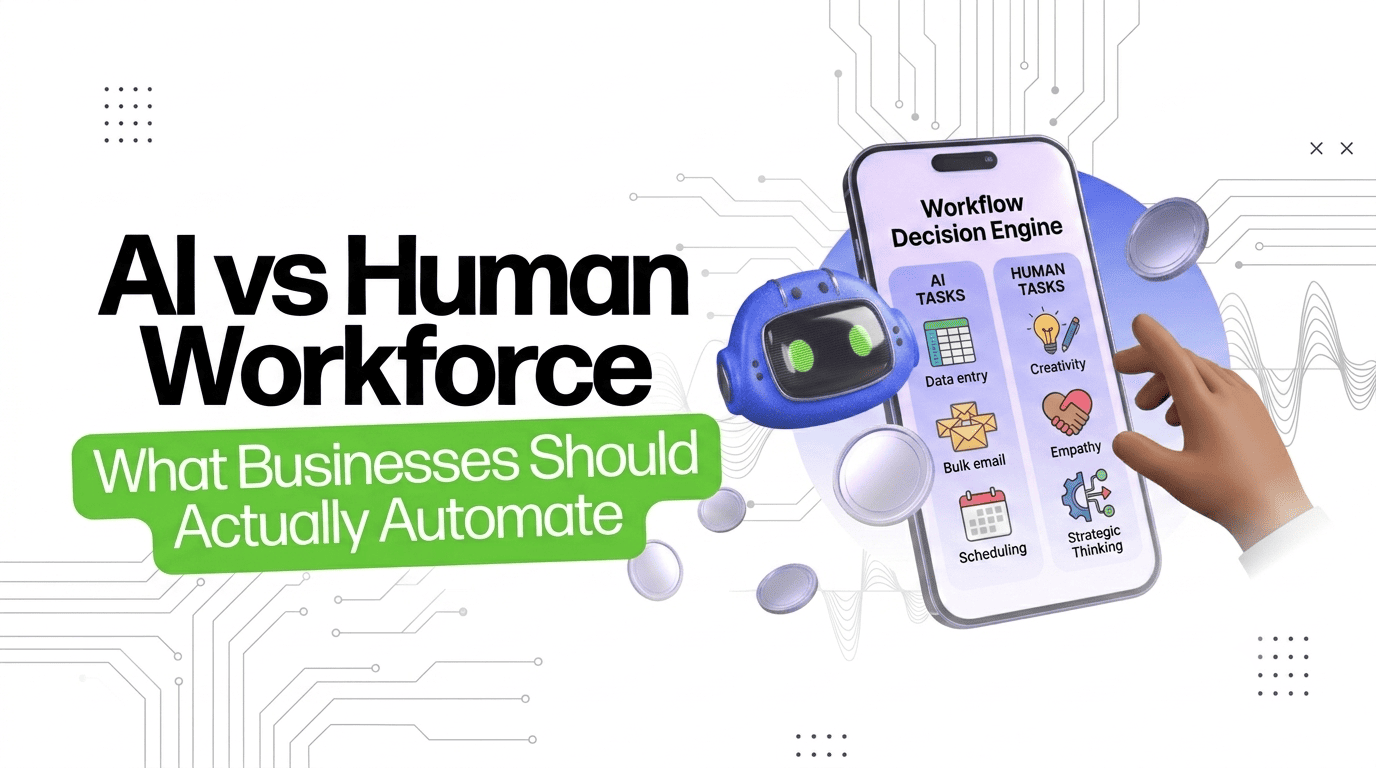
The workforce analytics AI market is projected to grow from $2.84 billion in 2024 to about $16.48 billion by 2033 at a ~20.1% growth rate. Artificial intelligence is no longer a dream — it is presently transforming the way organizations recruit, conduct business, analyze, and develop.
The discussion on AI and workforce transformation is not about the complete replacement of people. Rather, it is a question of new roles, new levels of efficiency, and creating a balanced environment in which technology enhances human potential instead of eliminating it.
The Emergence of AI in the Workplace
In the last 10 years, AI has been creeping into almost any business operation. What began as simple automation has grown into machine learning, natural language processing, and predictive intelligence. Today, AI in the workplace can:
- Screen thousands of job applications in minutes
- Project demand and staffing requirements
- Automate routine activities
- Give instant feedback to decision-makers
This rapid adoption has compelled firms to redefine workforce planning approaches. Traditional workforce models based on fixed roles are giving way to dynamic models where human beings and AI operate together.
Understanding the Human Workforce Advantage
Before deciding what to automate, businesses must understand what humans excel at. The human workforce brings characteristics that AI cannot yet deliver at scale:
- Emotional intelligence
- Ethical reasoning
- Creativity and innovation
- Complex problem-solving
- Relationship-building
Businesses that rush to automate purely for cost-cutting run the risk of disengaged employees and unstable operations. The human workplace is built on trust, collaboration, and purpose — qualities that are deeply rooted in human interaction.
What Human Resources Do in an AI-Driven Organization
A common misconception is that AI will substitute HR completely. In reality, when AI handles administration, HR professionals focus on what matters most:
- Strategic human resources planning
- Employee engagement and retention
- Culture development
- Leadership coaching
- Change management
Workforce AI enables the HR department to abandon manual operations and concentrate on people strategy. The alliance looks like this:
- AI studies attrition trends → HR formulates retention initiatives
- AI tracks performance data → HR offers coaching and development
What Businesses Should Actually Automate
Successful automation focuses on the right tasks — eliminating friction without eliminating meaning from work.
Repetitive and Programmatic Tasks
Automation works best where tasks follow clear rules and require little judgment. Examples include:
- Data entry and payroll processing
- Invoice management
- Attendance tracking
Workforce AI automating these processes minimizes mistakes, saves time, and gives employees higher-value work to focus on.
Data Analysis and Forecasting
AI excels at processing large amounts of data and identifying trends. Businesses should automate:
- Workforce demand forecasting
- Sales and productivity analysis
- Skills gap identification
In workforce planning, AI assists leaders in foreseeing future talent requirements rather than responding too late.
Resume Screening and Candidate Shortlisting
One of the most common applications of AI in the workplace is recruitment. AI can scan applications for desired skills, match candidates to job descriptions, and reduce hiring time significantly. However, humans must always be involved in final hiring decisions to ensure fairness and cultural alignment.
Customer Support (Tier 1)
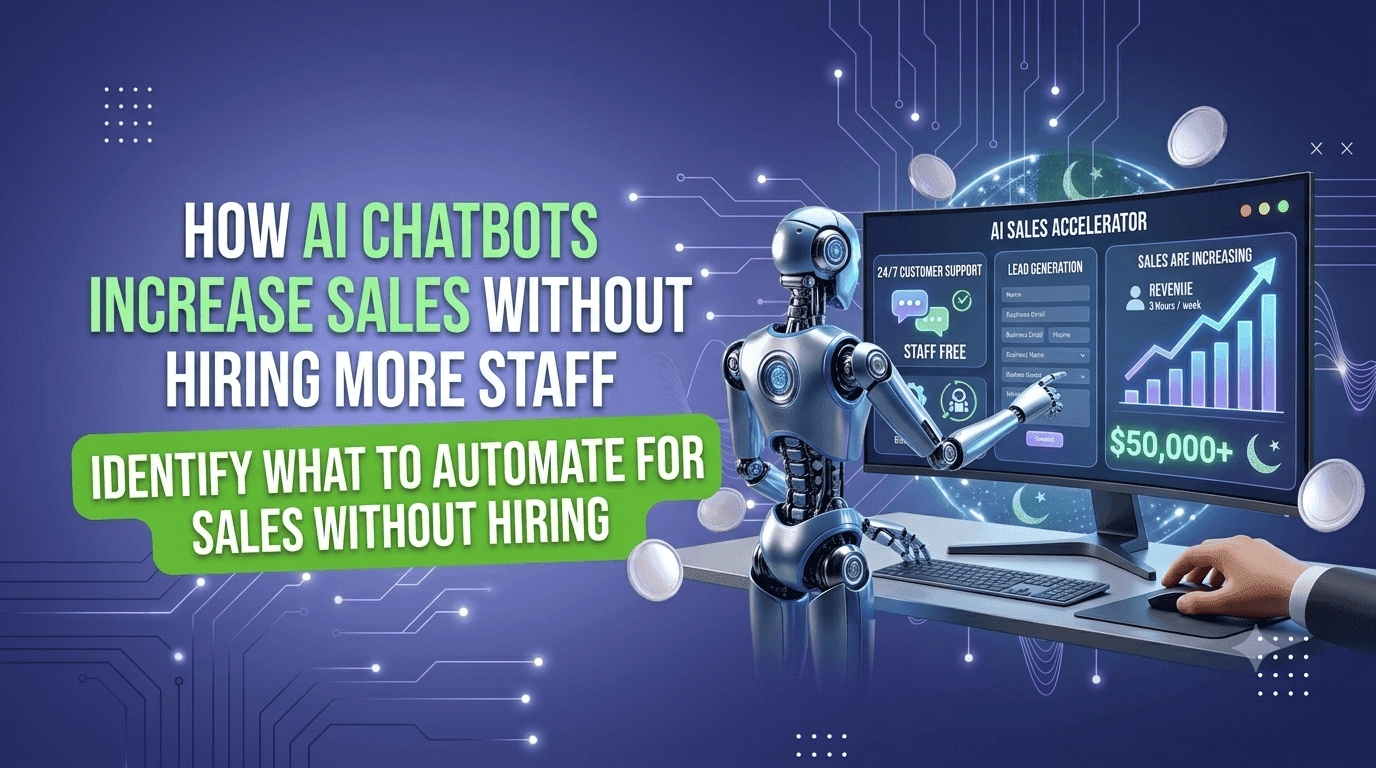
Chatbots and AI assistants handle simple customer queries efficiently. Automate: FAQs, appointment scheduling, and order tracking. Complex, emotional, or high-value interactions must remain human-led to preserve the customer experience.
What Should Not Be Fully Automated
Decision-Making and Leadership
AI can provide hints but cannot carry accountability, vision, or moral responsibility. Strategic decisions require human judgment and experience.
Employee Relations and Conflict Resolution
Handling workplace conflict requires empathy and situational insight. Automating these interactions creates a cold, transactional environment — harming trust and morale.
Creativity and Innovation
AI can assist innovation, but true breakthroughs emerge from human curiosity, lived experience, and collaboration.
AI vs Human Workforce: Comparison Chart
| Business Function | AI Strength | Human Strength | Best Approach |
|---|---|---|---|
| Data Processing | Speed & accuracy | Interpretation | AI-led, human-reviewed |
| Hiring | Resume screening | Final decision | Hybrid |
| Customer Support | Instant responses | Empathy | Tiered approach |
| Workforce Planning | Forecasting trends | Strategic judgment | AI + leadership |
| Performance Reviews | Data insights | Coaching & feedback | Human-led |
| Culture Building | Analytics | Emotional connection | Human-driven |
Workforce AI in Workforce Planning
Modern workforce planning goes beyond headcount. It encompasses skills, flexibility, and future readiness. Workforce AI assists by:
- Predicting skill shortages
- Mapping internal talent flow
- Identifying reskilling opportunities
- Promoting diversity and inclusion goals
Leaders must ensure AI systems are transparent and unbiased. Poorly designed AI can perpetuate inequality and damage workplace trust.
Ethical Implications of Workplace AI
Ethical responsibility is a fundamental leadership issue as AI gains prominence at work. Key considerations include:
- Data privacy
- Bias in AI algorithms
- Employee surveillance concerns
- Transparency in AI decision-making
Companies must clearly communicate how and why AI is used. Employees adopt AI more readily when they understand it helps rather than threatens them.
Building a Human-Centered AI Strategy
The most successful organizations treat AI as a partner, not a replacement. A strong strategy includes:
- Clear automation goals aligned to business objectives
- Employee participation in AI adoption
- On-the-job training and reskilling programs
- Human oversight on all AI-driven decisions
This approach builds trust, enhances performance, and maintains a healthy AI and workforce relationship.
The Future of the Human Workplace
AI is not going to replace humans — it will enhance them. According to a key report, the AI in the workplace market, encompassing automation, productivity tools, and AI-driven enterprise workflows, is expected to expand by USD 206.5 billion with a CAGR of ~21.3% through 2029.
Companies that thrive will: automate intelligently, invest in people, and restructure jobs rather than abolish them.
Automate Your Business With Markeltree
The debate between AI and the human workforce misses the real point. Automation is not about eliminating people — it is about empowering them. By understanding what human resources do best, strategizing workforce AI, and focusing on ethical AI in the workplace, organizations can achieve workforce productivity without sacrificing humanity.
Markeltree offers professional advice and end-to-end solutions on how to integrate AI responsibly and effectively — so your business benefits from intelligent automation while maintaining a strong, engaged human workplace.