EduReach : CMS Development
Summary
Markeltree partnered with EduReach Network, a nonprofit organization delivering educational resources to underserved communities across multiple regions. The organization needed a flexible and easy-to-manage content management system to support its growing library of learning materials, news updates, and program information.
Through its CMS Development service, Markeltree built a tailored content management solution that empowered the EduReach team to manage their digital presence independently and at scale.
About EduReach Network
EduReach Network was founded with a mission to close the educational gap by providing structured learning content, mentorship programs, and community resources to students who lacked access to quality schooling.
As the organization grew, its website became increasingly difficult to maintain. Content was scattered, publishing workflows were inefficient, and the team depended heavily on external developers for routine updates.
The leadership needed a CMS that non-technical staff could use confidently without sacrificing flexibility or design quality.
- CMS Strategy and Platform Selection
- Custom CMS Architecture and Configuration
- Theme Development and Design Integration
- Editorial Workflow Design
- User Training and Documentation
- Ongoing Maintenance and Support
The Challenges
Every project starts with real problems. Here are the core challenges we tackled for this engagement.
EduReach Network faced severe operational bottlenecks as its expanding digital library of learning materials, news, and program info became increasingly difficult to maintain. Because their existing setup lacked an intuitive, non technical interface, content was scattered across fragmented sections, and staff depended completely on external developers to make routine updates. Their publishing lifecycle lacked a structured editorial workflow, turning simple revisions into an inefficient process that lacked multi-tier approvals or clear role permissions. Furthermore, serving underserved communities across various regions meant their platform frequently failed in low-bandwidth environments and locked out users with disabilities due to unoptimized front end themes. Lacking a structured taxonomy, modular component design, and a centralized knowledge architecture, the organization struggled to categorize learning modules by age groups or scale its digital presence independently, preventing them from seamlessly delivering educational resources to those who needed them most.
How Markeltree Delivered Results
Requirements Gathering and CMS Strategy
Markeltree began with a structured discovery process to understand EduReach's publishing workflows, content types, user roles, and long-term content strategy. The team mapped out how different departments interacted with the website and what permissions each role required. This foundation shaped every architectural decision in the CMS build, ensuring the solution would serve actual operational needs rather than a generic feature list.
CMS Architecture and Custom Configuration
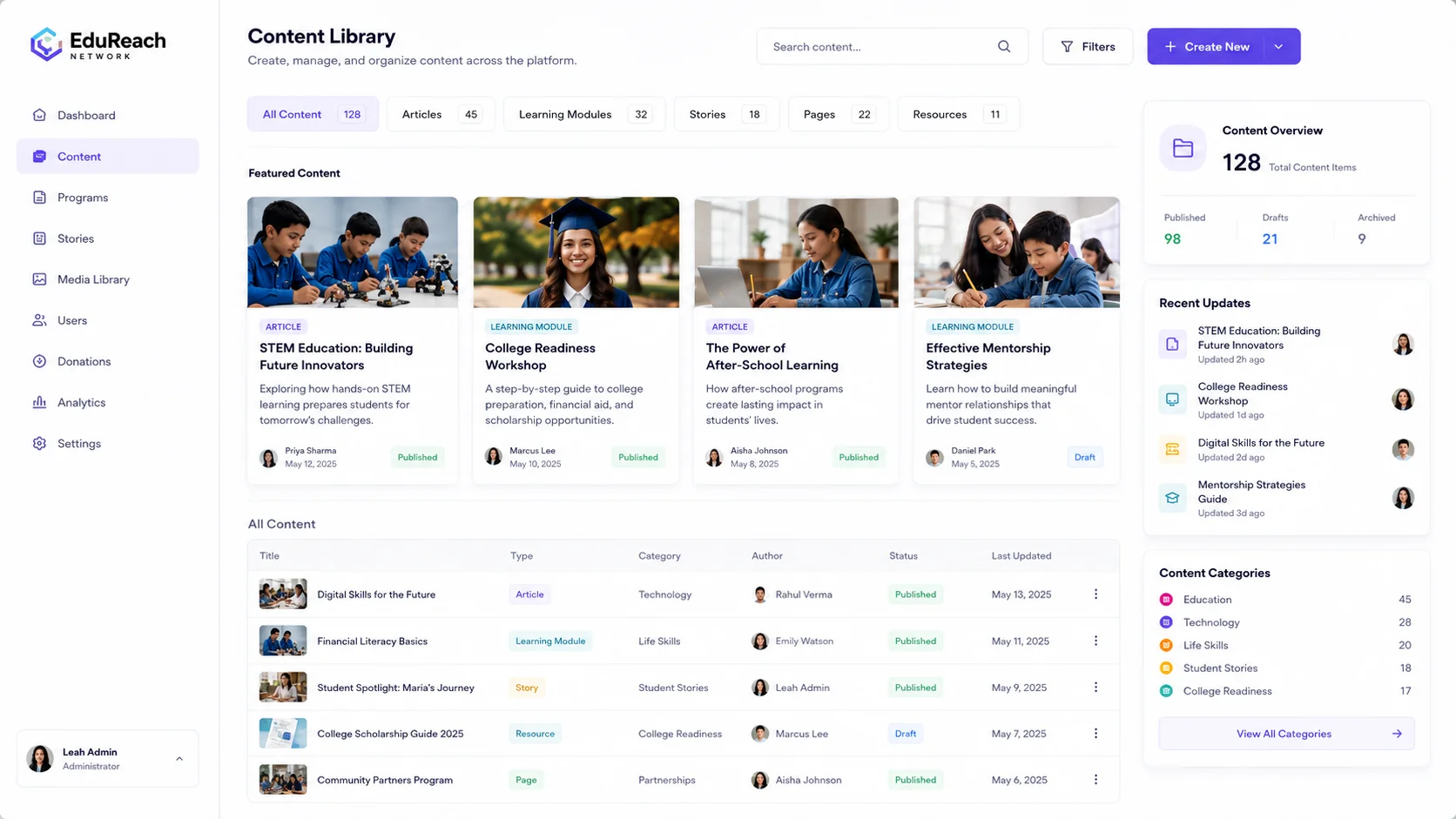
Based on the requirements analysis, Markeltree selected and configured a CMS platform suited to EduReach's scale and technical capacity. Custom content types were created for learning modules, program pages, news articles, and regional chapters. A structured taxonomy system was developed to allow filtering and discovery of content across categories and age groups. The editorial workflow was designed to include draft, review, and approval stages.
Design Integration and Theme Development
Markeltree's design team built a custom front-end theme aligned with EduReach's brand guidelines. The theme was fully responsive and optimized for low-bandwidth environments given the geographic range of the organization's audience. Components were designed to be modular, allowing content editors to build pages visually without writing code. Accessibility was a core requirement and was tested throughout development.
User Training and Documentation
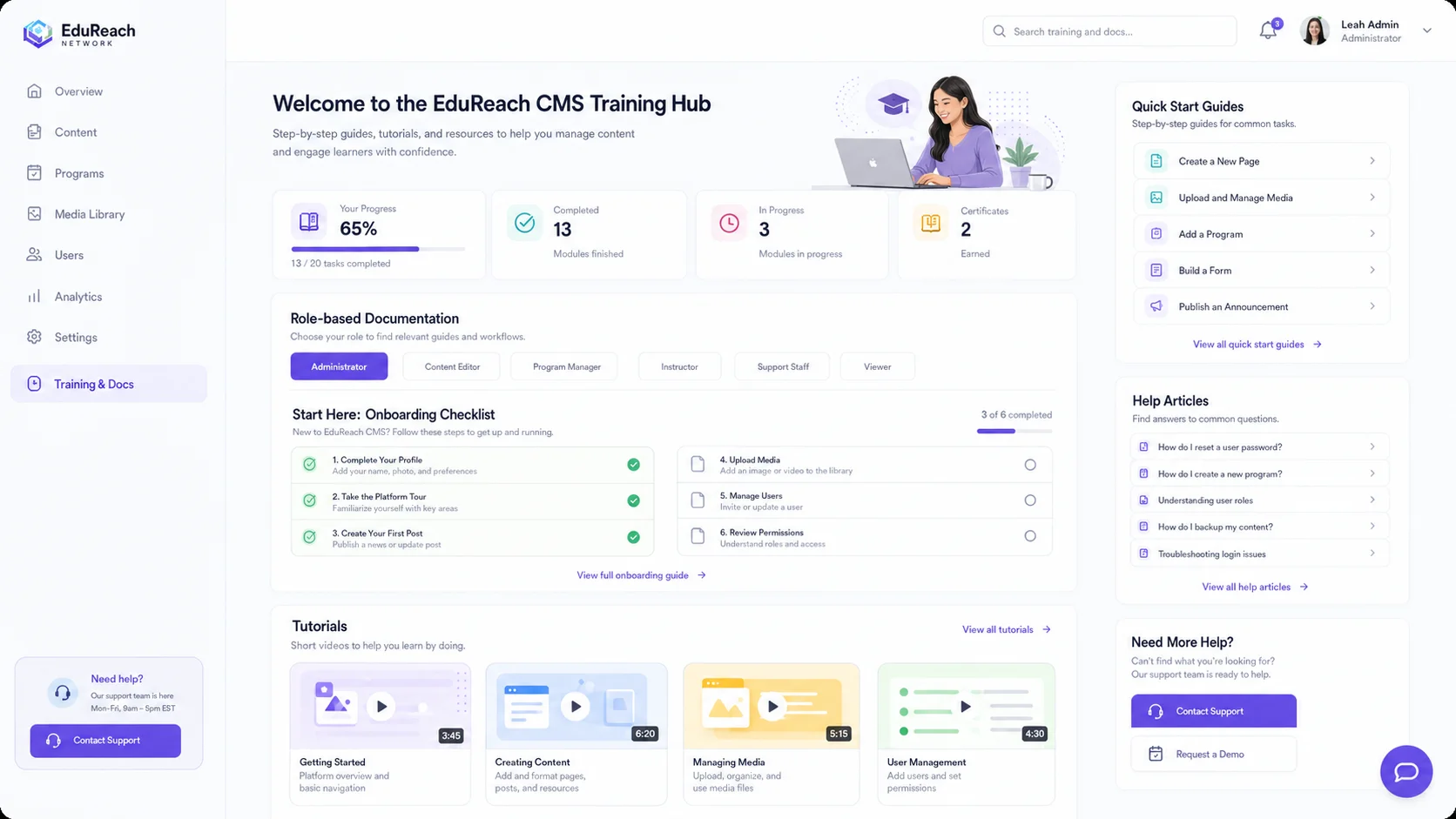
Following development, Markeltree conducted structured training sessions with EduReach staff across departments. Role-specific guides were prepared to help editors, program managers, and administrators use the CMS confidently. A documentation library was delivered alongside the platform, covering common tasks such as publishing articles, uploading resources, and managing program listings.
Ongoing Support and Platform Evolution
After launch, Markeltree provided maintenance support to ensure platform stability and address any emerging requirements. As EduReach expanded its programs, the CMS was extended with new content types and integrations without disrupting existing content or workflows.
Key Outcomes & Impact
Custom CMS delivered that matched EduReach's editorial and operational workflows
Non-technical staff able to publish and update content independently within days of training
Publishing time per content item reduced through streamlined editorial workflows
Consistent branding maintained across all content types and regions
Accessibility standards met, broadening reach to users with disabilities
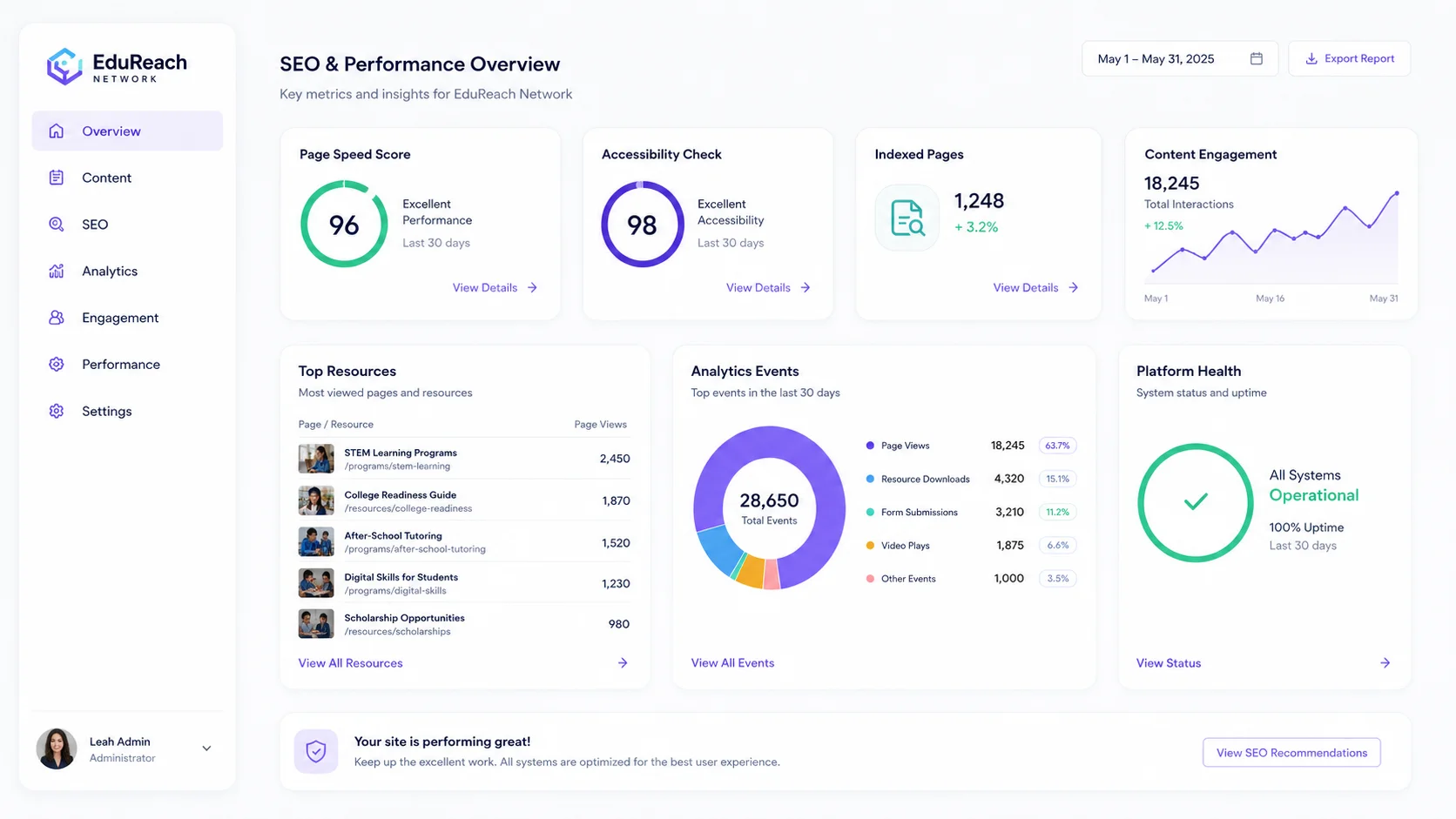
Structured taxonomy improved content discoverability across the website
Platform scaled to support new program areas without architectural changes
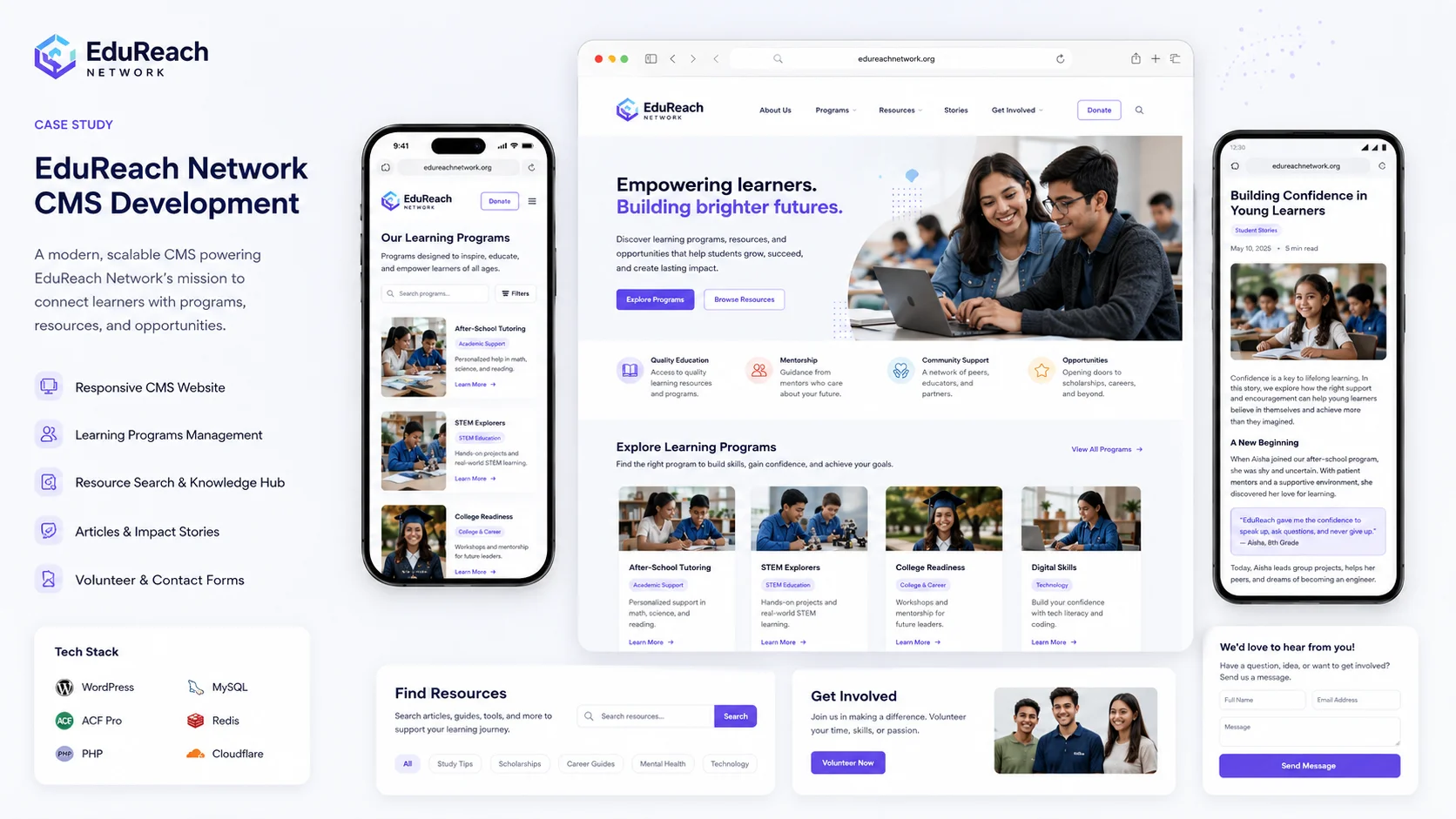
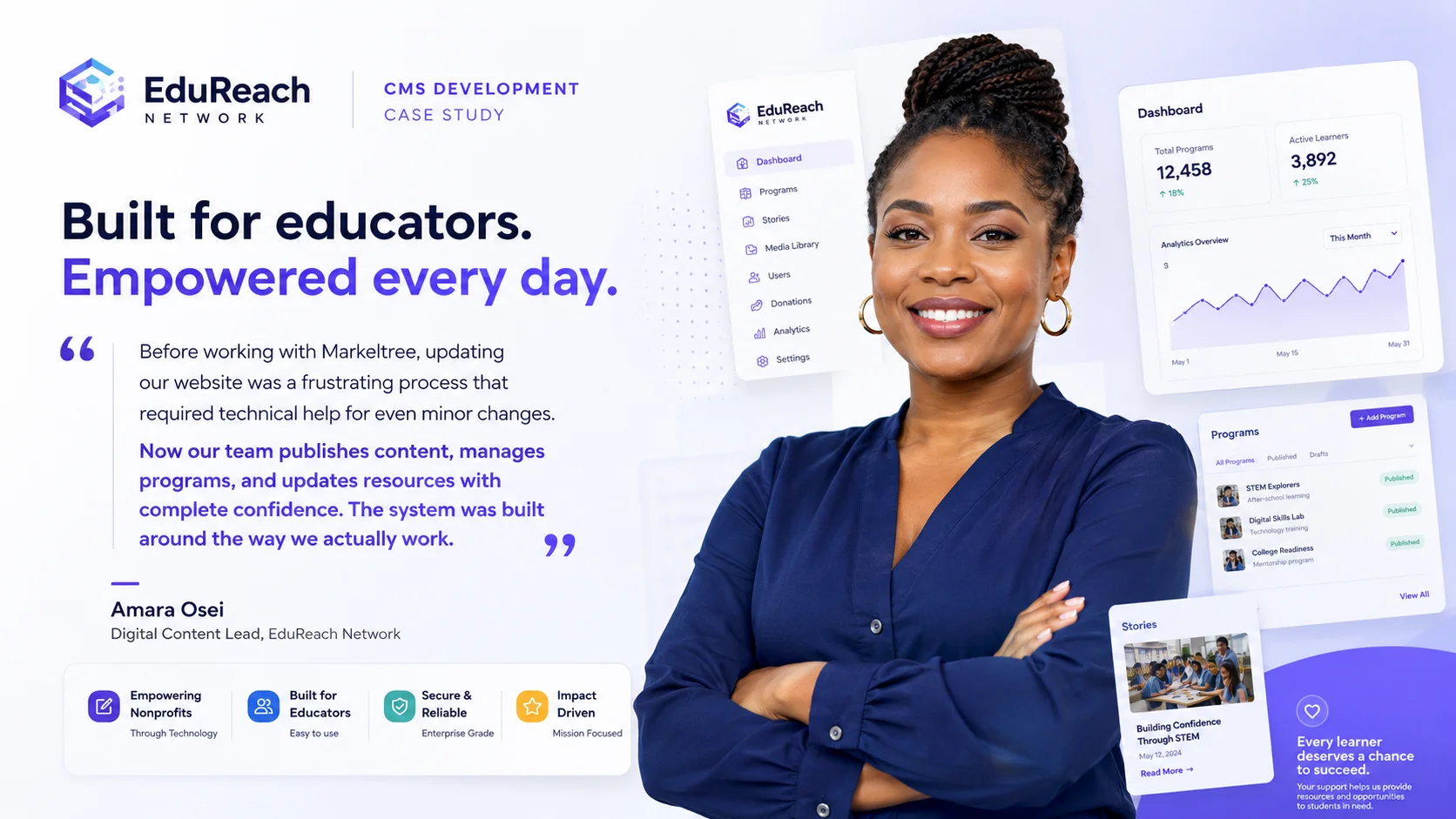
Before working with Markeltree, updating our website was a frustrating process that required technical help for even minor changes. Now our team publishes content, manages programs, and updates resources with complete confidence. The system was built around the way we actually work.
Ready To Become Our Next Success Story?
Let's build measurable results that transform your business growth.
Get in Touch to Discuss Your Vision With Our Industry Experts
What our customers say
Markeltree’s AI solutions helped us optimize our data workflows and decision-making process. Their team clearly understood our objectives and delivered a practical, results-driven AI implementation.





More Case Studies
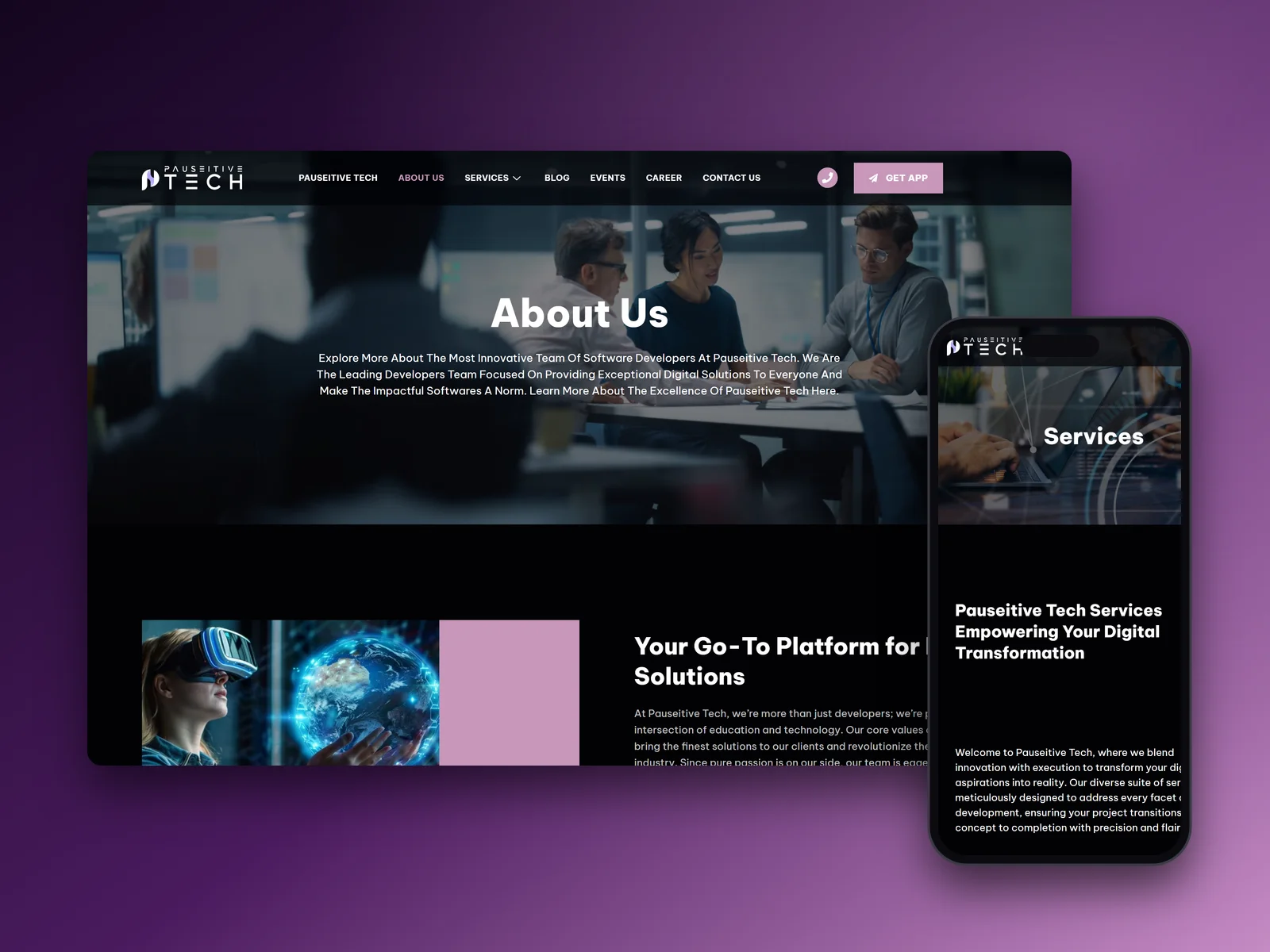
Pauseitive Tech : Building a Digital Home for an EdTech and Custom Software Studio
Designing and building a corporate website, service portal and lead-generation platform that explains 14+ services, builds trust with first-time visitors and turns them into qualified leads.
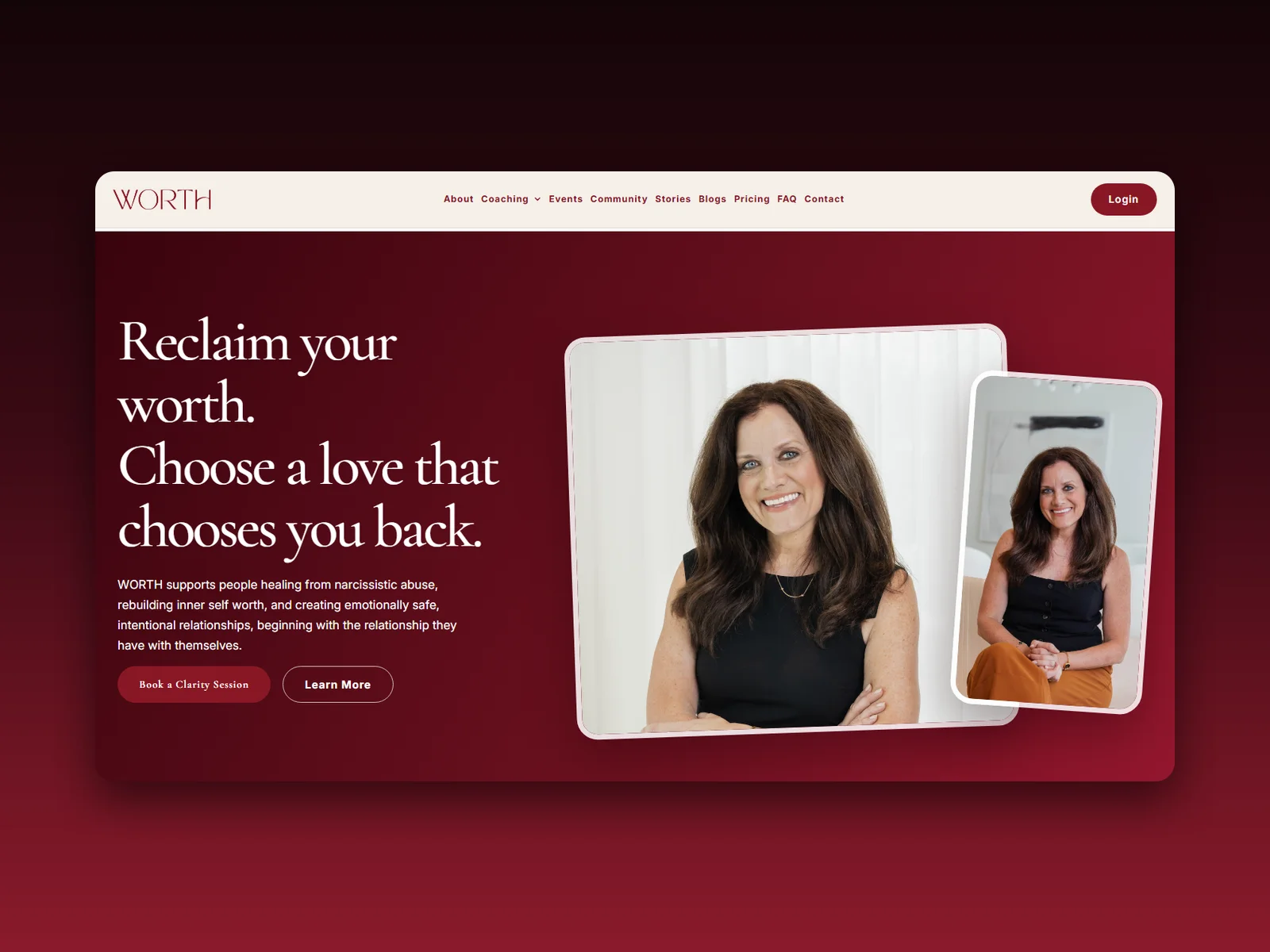
WORTH : Coaching Platform for Healing, Identity & Personal Growth
Designing and building a calm, trustworthy coaching platform with booking, payments, memberships, member login, community and a content hub for Dr. Kimberly Dalius.