Stratum : ERP Software Development
Summary
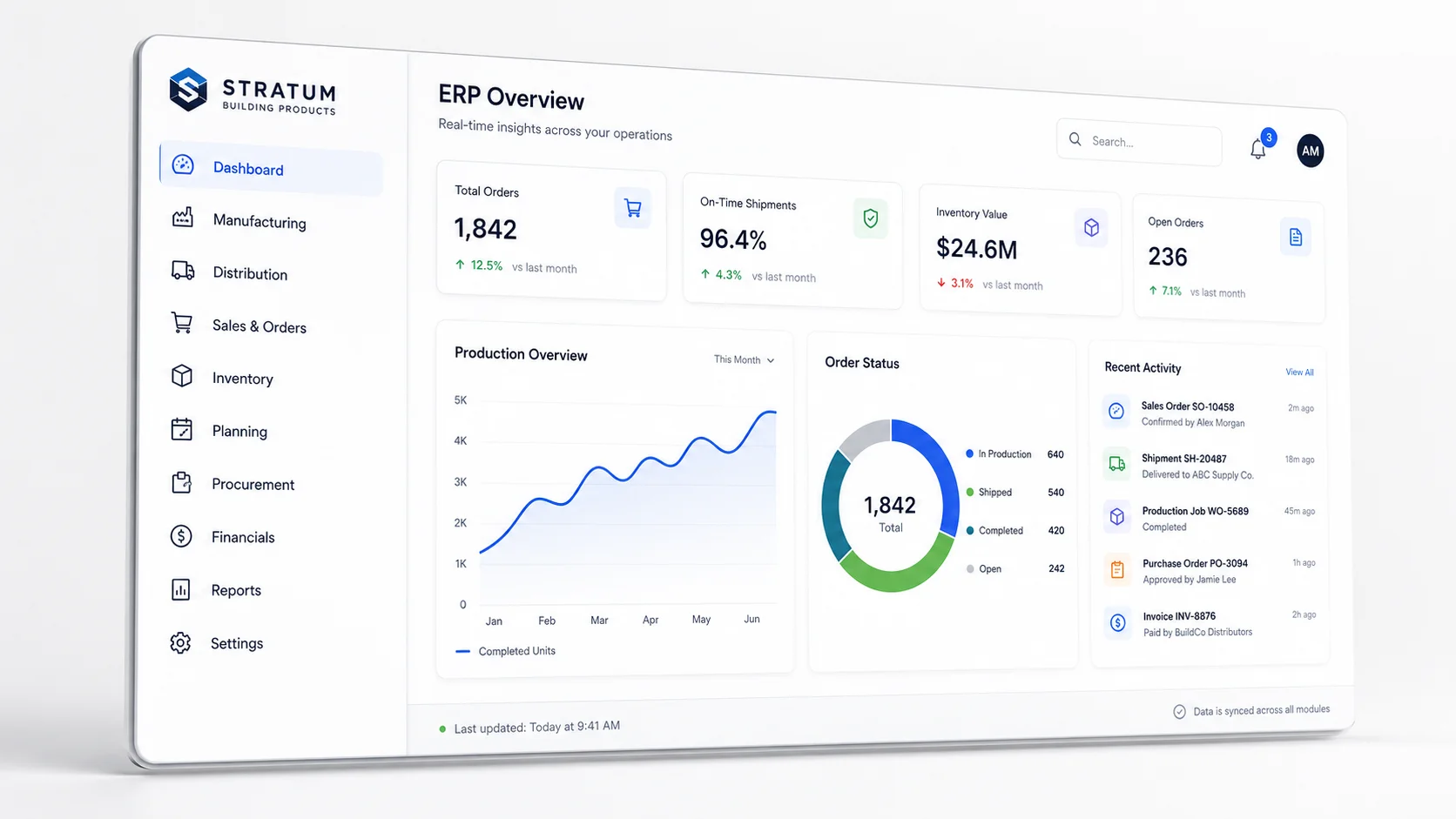
Stratum Building Products is a mid-size manufacturer and distributor of commercial roofing products serving contractors and building supply distributors across twenty-two states.
About Stratum Building Products
Stratum Building Products is a mid-size manufacturer and distributor of commercial roofing products serving contractors and building supply distributors across twenty-two states.
The company expanded from a regional supplier to a national distributor and accumulated a legacy manufacturing ERP installed in 2007, separate distribution software from a 2019 acquisition, and a growing library of departmental spreadsheets that filled in the gaps between them. The result was a business that had outgrown its operational infrastructure across every function from production planning to financial consolidation.
Markeltree was chosen to design and deploy a single purpose-built ERP system capable of supporting Stratum's current scale while remaining ready to support future growth.
- ERP Requirements Discovery and Business Process Mapping
- Platform Configuration and Custom Module Development
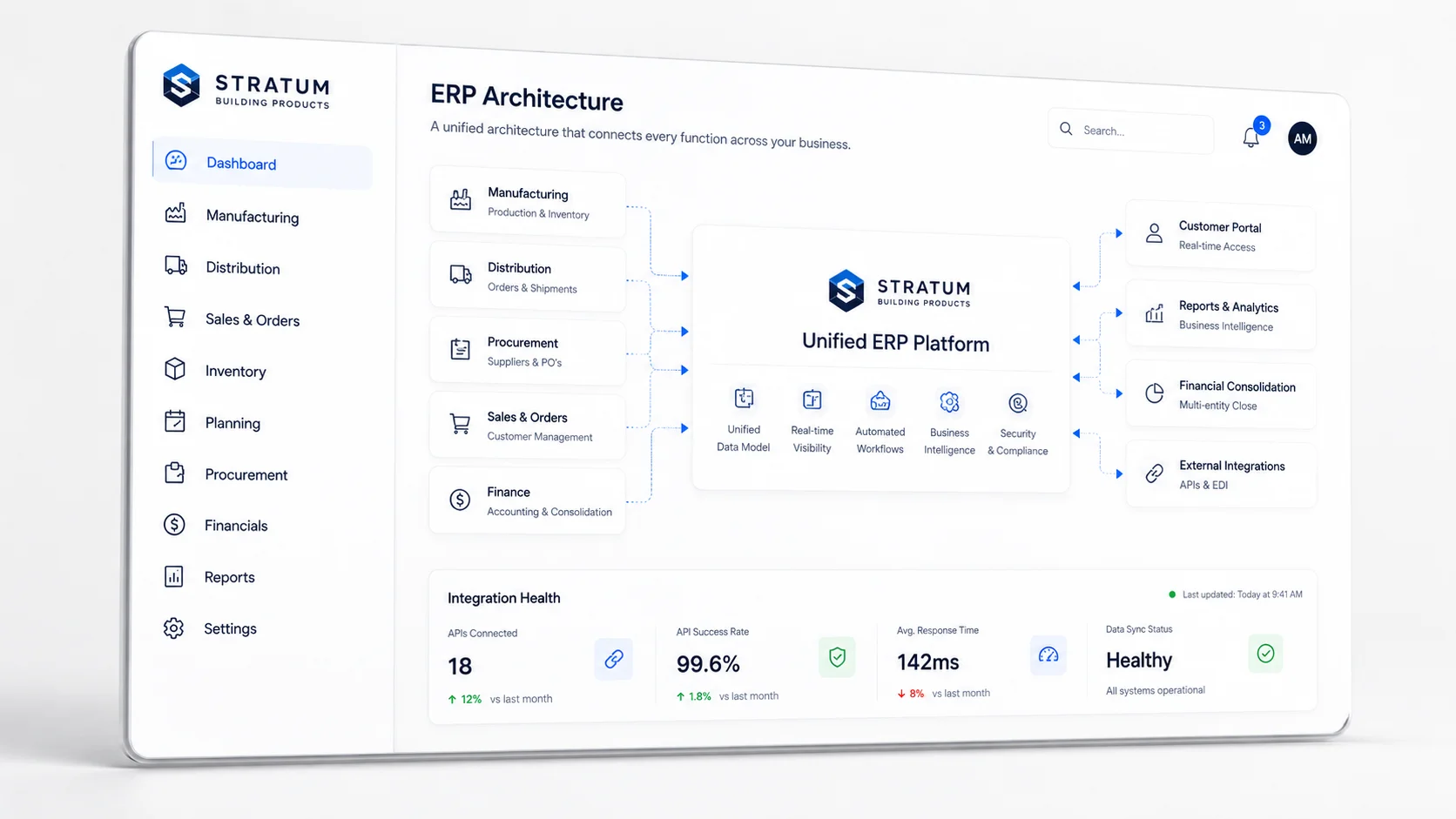
- Manufacturing and Distribution Data Model Design
- Customer Order Management Engineering
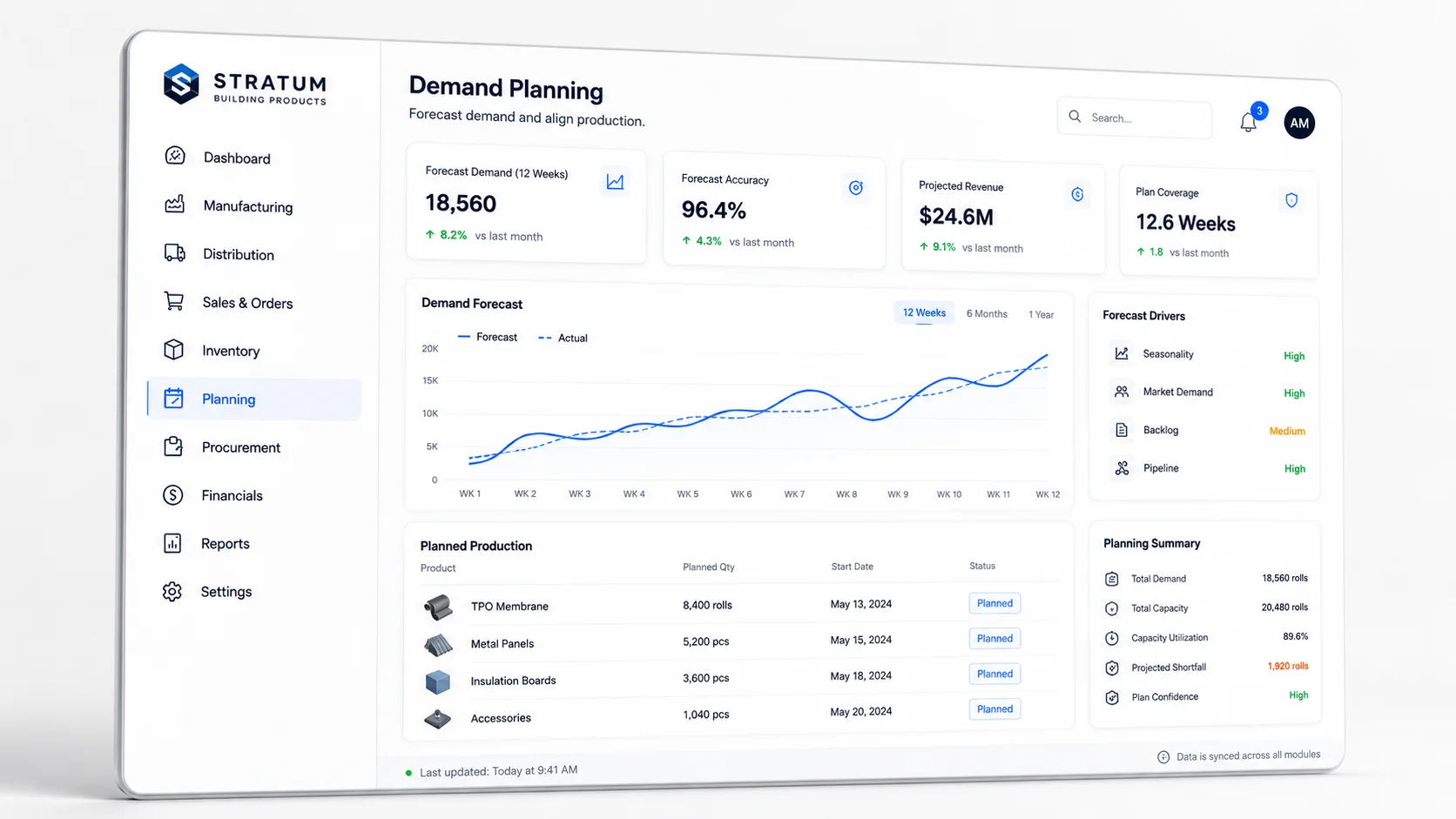
- Demand-Driven Production Planning Development
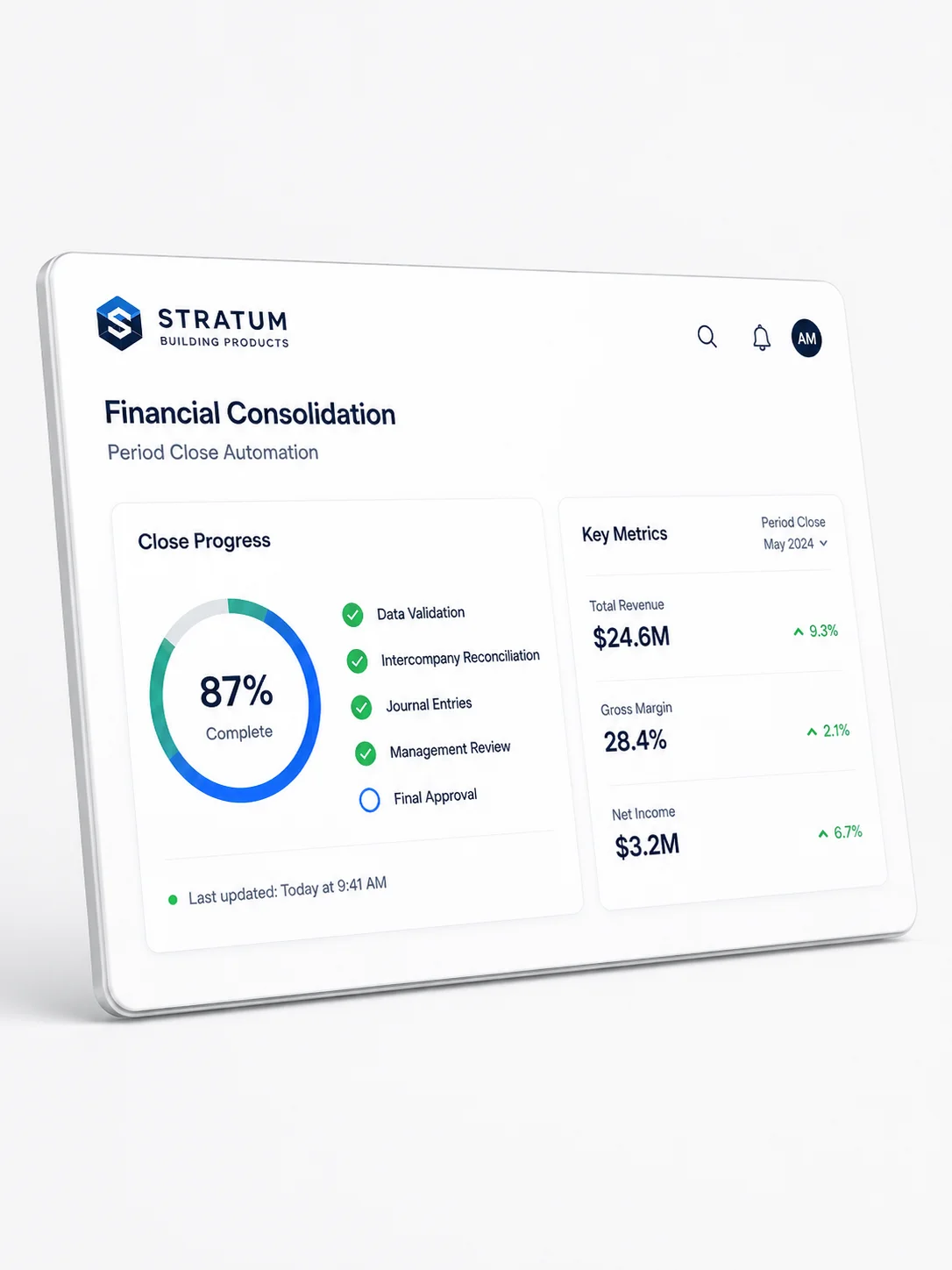
- Financial Consolidation Workflow Engineering
The Challenges
Every project starts with real problems. Here are the core challenges we tackled for this engagement.
Two incompatible core systems one for manufacturing and one for distribution created a structural data divide requiring manual reconciliation of production output with distribution orders.
Customer order management was spread across both systems and several spreadsheets, leading to inconsistent order status visibility and unclear communication with contractor clients.
Financial consolidation required accounting staff to extract and manually merge data from both systems at period end, consuming more than a week of staff time each month.
There was no visibility into distribution demand forecasts, resulting in excess production of slow-moving materials and stockouts of high-demand products.
The manufacturing ERP was approaching end-of-vendor support, which leadership identified as a critical security and compliance risk.
Core approach & deliverables
A breakdown of the core components built and delivered for this project.
ERP Requirements Discovery and Business Process Mapping
Markeltree held focused discovery sessions with stakeholders from manufacturing, distribution, sales, procurement, finance, and customer service to document existing processes and the specific configurations and custom capabilities required to support Stratum's business model. This discovery directly informed platform selection and the design of custom modules rather than defaulting to generic vendor configurations.
Unified Manufacturing and Distribution Data Model
The core challenge was the structural disconnect between manufacturing and distribution. Markeltree developed a common data model in which production orders, material inputs, finished goods inventory, and distribution orders existed within a single system. Production planners could monitor distribution demand in real time. Distribution coordinators could view production schedules and finished goods availability without weekly email updates from manufacturing.
Customer Order Management Consolidation
Customer order management was redesigned as a single process from order entry through credit and pricing, inventory allocation, production scheduling for made-to-order materials, shipment coordination, and invoicing. Order status updates became consistent across all contractor clients. Inbound customer service calls dropped significantly as order status was communicated from one system rather than fragmented across multiple platforms.
Demand-Driven Production Planning Module
Markeltree built an in-house production planning module that retrieved rolling demand signals from the distribution order pipeline and produced production recommendations based on current inventory positions, plant capacity, and material lead times. The module enabled production planners to shift from reactive planning based on stockouts that had already occurred to proactive planning informed by future demand signals.
Financial Consolidation and Period Close Automation
The month-end accounting process that consumed more than a week of staff time was restructured as an automated consolidation workflow. Manufacturing, distribution, procurement, and sales data flowed continuously into the ERP's financial module, transforming the period close process into a review and approval exercise. The consolidated data model automatically handled intercompany reconciliation that was previously performed manually in spreadsheets.
Key Outcomes & Impact
Two incompatible legacy systems replaced by a unified ERP platform, eliminating all bridging spreadsheets.
Integrated manufacturing and distribution data model providing shared real-time inventory and order visibility.
Demand-driven production planning module minimising stockouts and overproduction.
Consolidated customer order management process improving contractor-client communication.
Financial close time reduced from over one week to under two days per month through automated consolidation.
We were a national business but we were still operating on systems built for a regional one. Markeltree's impact on us was not just software it was software that understands our business, and we see that in our daily operations.
Ready To Become Our Next Success Story?
Let's build measurable results that transform your business growth.
Get in Touch to Discuss Your Vision With Our Industry Experts
What our customers say
Markeltree’s AI solutions helped us optimize our data workflows and decision-making process. Their team clearly understood our objectives and delivered a practical, results-driven AI implementation.





More Case Studies
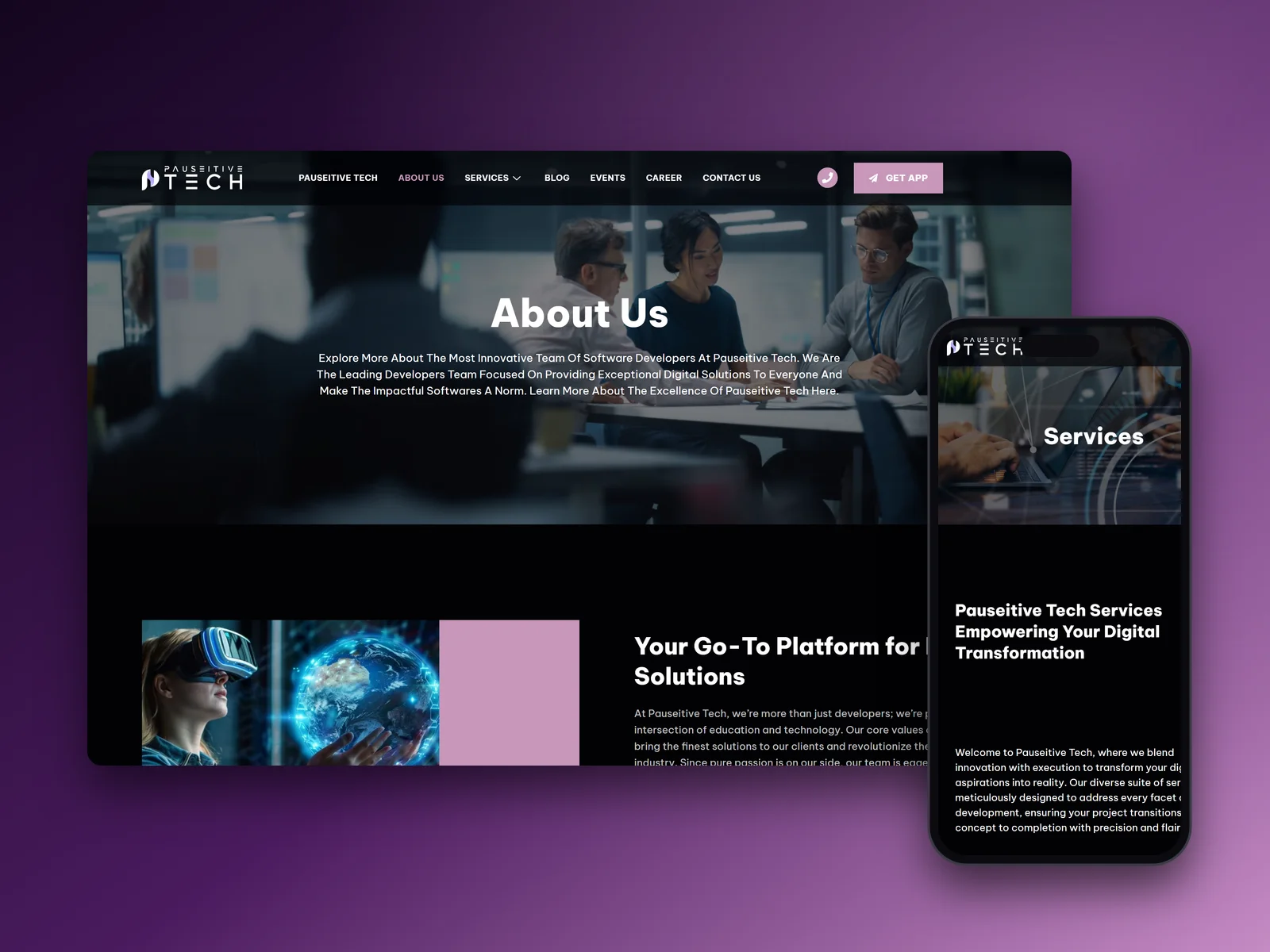
Pauseitive Tech : Building a Digital Home for an EdTech and Custom Software Studio
Designing and building a corporate website, service portal and lead-generation platform that explains 14+ services, builds trust with first-time visitors and turns them into qualified leads.

WORTH : Coaching Platform for Healing, Identity & Personal Growth
Designing and building a calm, trustworthy coaching platform with booking, payments, memberships, member login, community and a content hub for Dr. Kimberly Dalius.